
Foundations That Stay Dry During Heavy Rains
Crawlspace Drainage Systems in Hertford for properties with recurring water intrusion
Groundwater accumulates beneath homes when storms overwhelm soil absorption capacity and water tables rise close to foundation elevations. J&W Crawlspace LLC installs French drains, drain tile systems, and sump basins in crawlspaces where standing water appears after rainfall or during seasonal wet periods common to northeastern North Carolina. The drainage work redirects water away from floor joists and footings before saturation causes wood rot or undermines structural supports.
French drain installation involves excavating trenches along interior foundation perimeters, setting perforated pipe in gravel beds that collect water seeping through soil, and routing flow to discharge points or sump basins that pump water away from the property. Drain tile systems work similarly but extend beneath the entire crawlspace floor to capture water before it rises above the gravel layer, particularly necessary in low-lying areas where water tables fluctuate throughout the year.
Arrange an on-site consultation to map water entry patterns and determine which drainage configuration prevents flooding under your foundation.
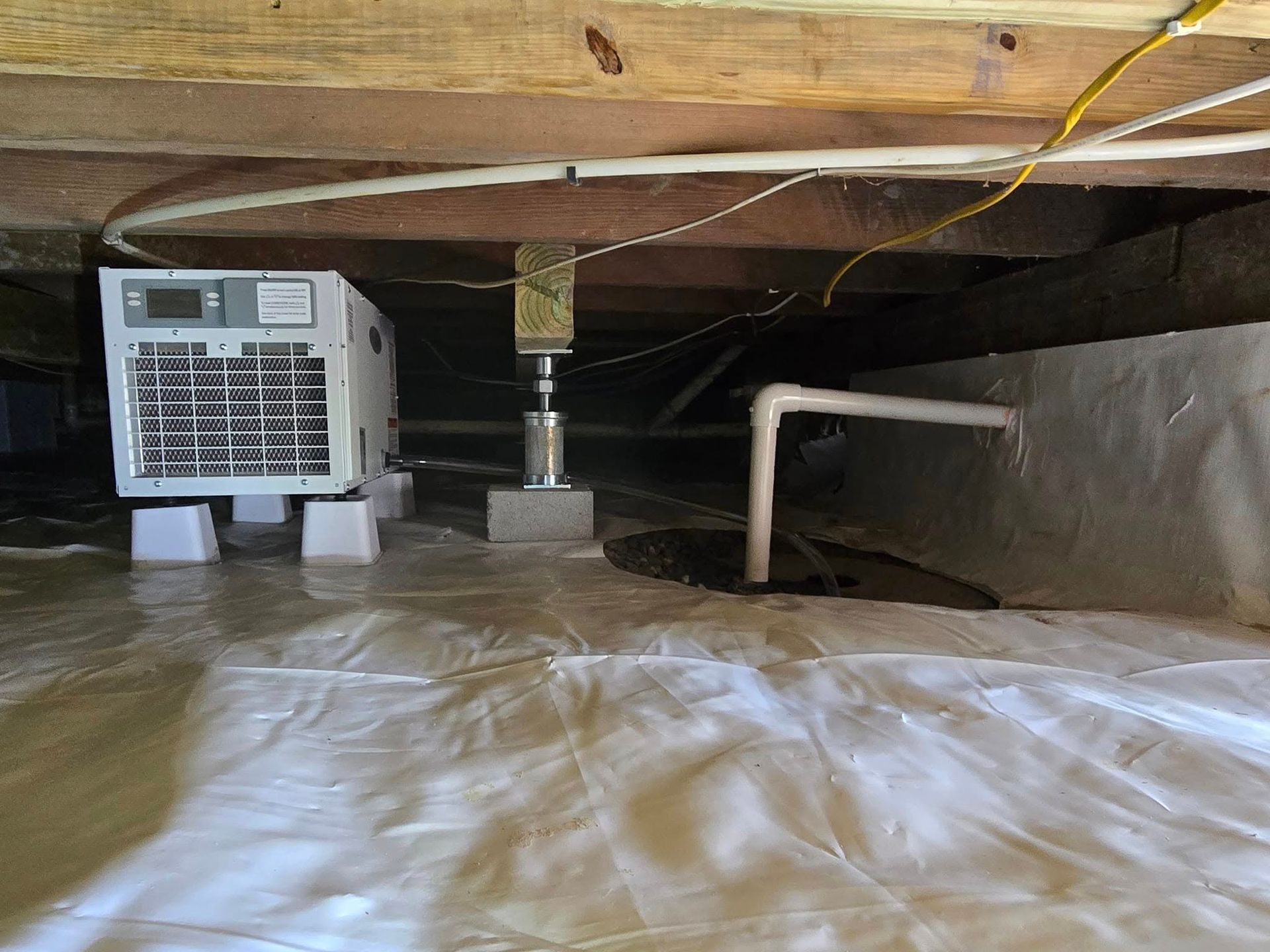
How Drainage Addresses Crawlspace Water Problems
The installation process requires grading crawlspace floors to create positive slope toward collection points, since gravity must move water through the system without mechanical assistance until it reaches sump locations. Sump basins sit at the lowest point in the drainage network, equipped with float-activated pumps that discharge water through PVC lines running to daylight terminations or underground dispersion fields at least ten feet from foundation walls.
Once operational, you'll see dry crawlspace floors within hours of heavy rainfall instead of puddles that persist for days or weeks. The musty smell caused by stagnant water and damp soil disappears as air circulation improves, and wooden floor joists stop showing new water staining or soft spots that indicate active decay. Pest activity decreases since insects and rodents avoid dry environments that lack the moisture they need for survival.
Drainage systems require outlets that don't reintroduce water to the foundation, meaning discharge lines must slope away from the house and terminate in areas with adequate soil absorption or connection to storm sewer infrastructure. Properties with clay-heavy soil or minimal yard space may need extended discharge runs or underground retention systems to handle pump output during extended rain events typical of hurricane season.
Common Questions About This Service
Property owners facing water intrusion usually want to know how drainage systems function and what results to expect.
What causes water to enter crawlspaces?
Groundwater rises through soil when rainfall exceeds drainage capacity, hydrostatic pressure forces water through foundation cracks or porous block, and surface runoff enters through foundation vents or gaps in perimeter walls, especially during storms that drop several inches of rain in short periods.
How do French drains differ from drain tile?
French drains typically run along foundation perimeters to intercept water traveling horizontally through soil, while drain tile systems cover the entire crawlspace floor to capture water rising vertically from below, with your property's water table depth determining which approach works best.
When does a sump pump become necessary?
You need pump-assisted drainage when crawlspace elevation sits below surrounding grade and water cannot exit through gravity-fed lines, or when soil saturation prevents passive drainage from moving water away quickly enough during peak flow conditions in Hertford's flat coastal terrain.
What maintenance do these systems require?
You should inspect sump basins quarterly to remove sediment buildup, test pump operation before rainy season begins, and clear discharge line terminations of debris that might block outflow during heavy use periods.
Why doesn't grading the yard solve the problem?
Surface grading addresses runoff but doesn't control groundwater that rises through soil from below or lateral flow that travels underground toward your foundation, which is why interior drainage systems remain necessary even after exterior improvements.
J&W Crawlspace LLC designs drainage solutions based on how water enters your specific crawlspace and where it can be safely discharged. Schedule a property evaluation to identify water sources and review system options that match your foundation layout.