
Air That Stays Dry Beneath Living Spaces
Crawlspace Moisture Control in Hertford for homes with humidity-related odors and condensation
High humidity beneath homes creates conditions where mold grows on floor joists, condensation forms on cool surfaces during summer months, and musty smells migrate into living areas through floor penetrations and ductwork. The problem intensifies in coastal North Carolina where outdoor humidity regularly exceeds seventy percent and vented crawlspaces pull moisture-laden air across bare soil that releases additional water vapor. J&W Crawlspace LLC installs dehumidifiers and ventilation improvements in Hertford crawlspaces where relative humidity measurements exceed recommended levels, preventing the wood decay and air quality issues that follow prolonged moisture exposure.
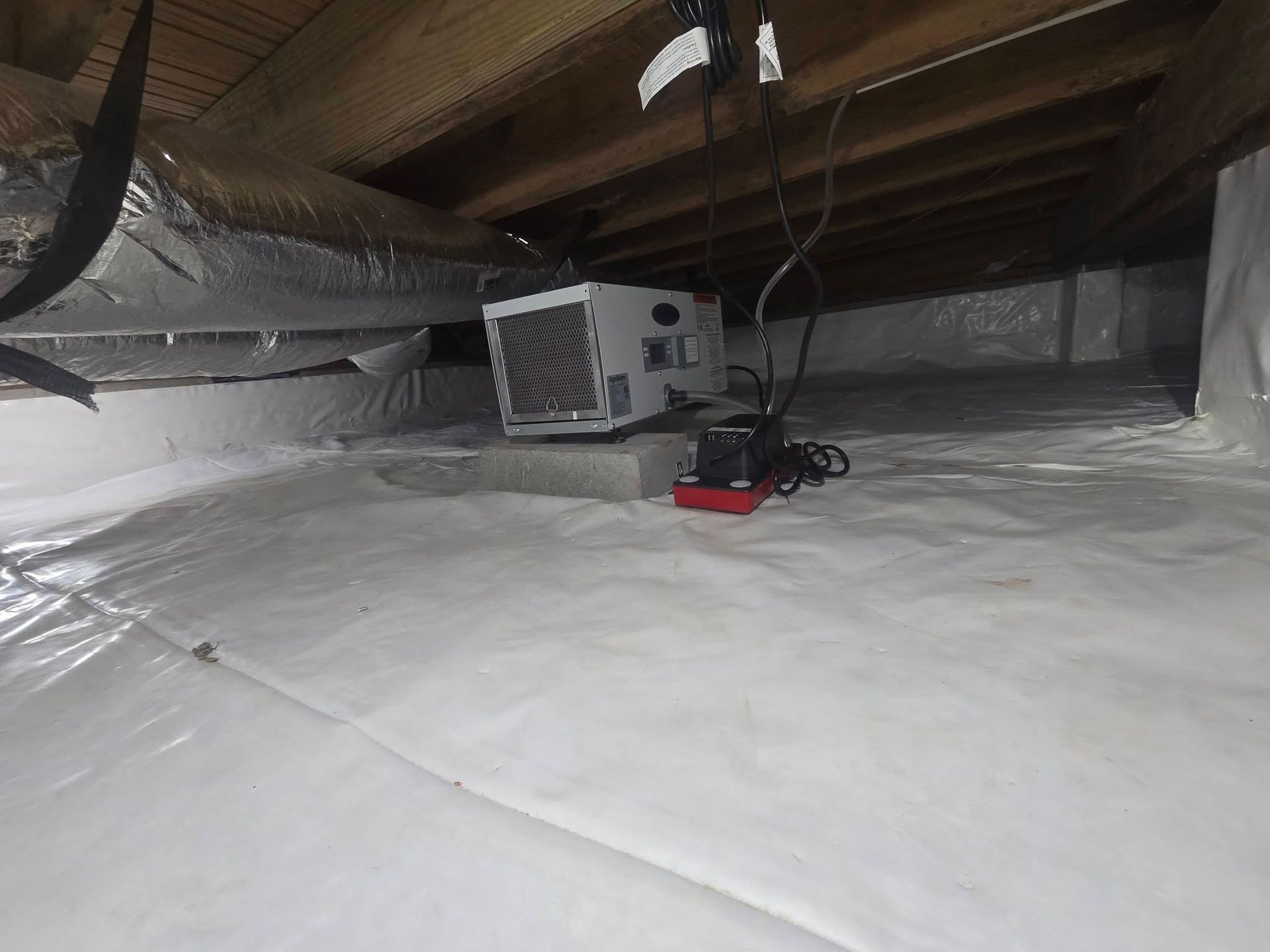
Moisture control involves sealing foundation vents to stop outdoor air infiltration, covering soil with vapor barriers that block ground moisture, and running dehumidifiers sized to process the cubic footage of your crawlspace. The equipment removes water vapor from the air continuously, maintaining humidity below sixty percent where mold spores can't germinate and wood maintains structural integrity.
Schedule a crawlspace evaluation to measure current humidity levels and identify moisture sources affecting air quality beneath your home.
Why Humidity Reduction Works for Long-Term Protection
Dehumidification systems use refrigerant coils to condense water vapor from crawlspace air, collecting moisture in reservoirs that drain to sump pumps or daylight discharge points, with units running continuously during humid months to offset vapor entering through foundation walls and soil. Proper sizing requires calculating crawlspace volume and estimating moisture load based on soil conditions, climate data, and whether vapor barriers already cover the ground, since undersized units can't keep pace with vapor introduction in high-humidity environments.
You'll notice the musty smell disappears within days as mold stops releasing spores into stagnant air, and condensation no longer appears on metal ductwork or foundation walls during cooling season. Floor joists dry out and stop showing the dark staining that indicates elevated moisture content, reducing the risk of rot that leads to structural repairs. Indoor air quality improves as fewer mold spores and moisture odors enter your home through gaps in the floor assembly.
Dehumidifiers work best in crawlspaces already equipped with vapor barriers and sealed vents, since equipment can't effectively dry spaces where outdoor air continuously introduces new moisture or exposed soil releases unlimited vapor. Ventilation improvements sometimes mean closing existing vents and conditioning the crawlspace as part of the home's thermal envelope rather than treating it as outdoor space, a strategy that reduces both humidity and energy loss through floor insulation.
Answers to Frequent Service Questions
Humidity concerns prompt specific questions about how moisture control systems function and what maintenance they require.
What humidity level should crawlspaces maintain?
You want relative humidity below sixty percent to prevent mold growth and wood decay, with most systems targeting fifty to fifty-five percent during humid months to provide a safety margin when outdoor conditions peak during summer storms.
How do dehumidifiers differ from ventilation?
Dehumidifiers actively remove moisture from air through mechanical condensation, while ventilation relies on air exchange that only reduces humidity when outdoor air is drier than crawlspace air, which rarely occurs during North Carolina's humid season from May through September.
When should foundation vents be sealed?
You should close vents when converting to conditioned crawlspace design with dehumidification, since open vents allow humid outdoor air to enter and overwhelm equipment capacity, making it impossible to maintain target humidity levels during peak summer conditions in coastal areas.
What causes condensation on crawlspace surfaces?
Warm, humid air contacts cool foundation walls or metal ductwork and reaches dew point temperature where water vapor condenses into liquid droplets, the same process that fogs windows in air-conditioned spaces during humid weather.
Why do vapor barriers matter for moisture control?
Polyethylene sheeting covering crawlspace soil blocks ground moisture from evaporating into the air, reducing the moisture load dehumidifiers must remove and preventing unlimited vapor introduction from damp earth beneath your home.
J&W Crawlspace LLC measures existing humidity conditions and installs control systems sized for your crawlspace volume and moisture sources. Arrange an assessment to review dehumidifier options and determine which ventilation modifications will support effective humidity management beneath your home.