Eliminate Growth That Destroys Wood Framing
Fungal & Mold Removal in Hertford for crawlspaces with visible growth and decaying structural members
Wood-destroying fungus appears as white, brown, or black growth on joists and beams when moisture levels stay above 20% long enough for spores to colonize the wood. J&W Crawlspace LLC removes affected framing sections, treats remaining wood with antimicrobial solutions that kill dormant spores, and addresses the moisture sources that allowed growth to establish. Mold and fungal issues in Hertford crawlspaces stem from the region's year-round humidity combined with poor ventilation or water intrusion that keeps wood surfaces damp continuously.
Remediation starts with containing the work area to prevent spores from spreading into living spaces during removal, then physically removing contaminated materials and disposing of them properly. Antimicrobial treatments penetrate wood surfaces to kill fungal colonies that haven't yet caused visible decay, preventing them from resuming growth if moisture returns temporarily.
Schedule a crawlspace inspection to assess the extent of fungal growth and identify which moisture problems need correction.
What Mold Remediation Actually Accomplishes
Professional removal uses HEPA filtration and negative air pressure to capture airborne spores during the cleaning process, preventing contamination from migrating through floor gaps and ductwork. Wood that shows surface mold but remains structurally sound gets wire-brushed or sanded to remove growth, then treated with fungicides that leave residual protection against future colonization.
After treatment finishes, musty odors disappear from your home within days as mold spores stop circulating through the HVAC system, and visible growth no longer appears on crawlspace surfaces. Air quality testing performed before and after remediation typically shows spore counts dropping from elevated levels back to normal outdoor background levels, confirming that the active colony has been eliminated.
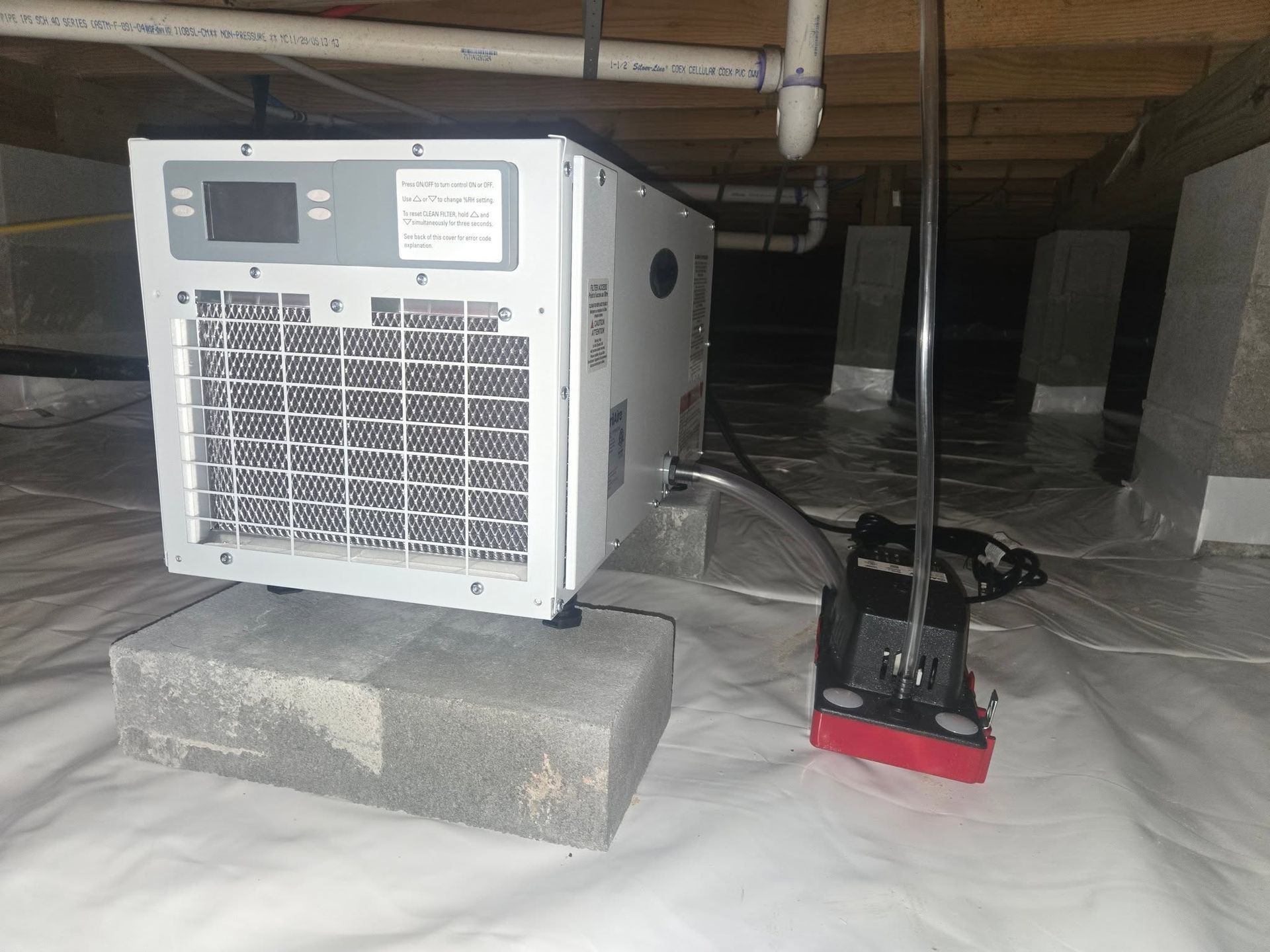
Treating existing mold doesn't prevent regrowth if crawlspace moisture stays elevated—dehumidification, encapsulation, or waterproofing must follow remediation to maintain the dry conditions that keep fungal spores dormant. Most remediation projects include moisture control recommendations specifically because eliminating growth without addressing its cause leads to recurrence within months.
Answers to Frequent Service Questions
Mold and fungal growth raise health concerns and questions about how thoroughly the problem can be resolved for different crawlspace conditions.
What's the difference between mold and wood-destroying fungus?
Mold grows on wood surfaces and causes discoloration and odor but doesn't significantly damage structure, while wood-destroying fungus actually digests wood fibers and causes rot that weakens joists and beams over time.
How do antimicrobial treatments prevent mold from returning?
Fungicides bond to wood surfaces and remain active for months to years, killing spores that land on treated areas before they can establish colonies—this buys time to implement permanent moisture control that makes the environment unsuitable for growth.
When does mold growth require complete wood replacement?
Framing members with soft spots, visible rot, or structural deflection need replacement regardless of treatment, since the fungus has already compromised their load-bearing capacity beyond what surface remediation can restore.
Why do crawlspaces in coastal areas like Hertford develop mold frequently?
High outdoor humidity means crawlspace air stays above 60% relative humidity year-round unless mechanical dehumidification or encapsulation systems control it, and mold colonizes wood whenever humidity exceeds 60% for extended periods.
What happens during the containment process before removal?
Plastic barriers seal the crawlspace from living spaces, negative air machines pull air through HEPA filters to capture spores, and workers wear respiratory protection to avoid inhaling concentrated spore loads during physical removal work.
J&W Crawlspace LLC evaluates fungal growth patterns to determine which areas need removal versus treatment and what moisture control measures will prevent recurrence. Request a mold assessment to receive detailed remediation specifications and humidity management recommendations.