Spaces That Stop Energy Loss Year-Round
Crawlspace Insulation in Hertford for homes with high heating and cooling costs
J&W Crawlspace LLC installs spray foam and fiberglass insulation in crawlspaces where untreated surfaces allow conditioned air to escape and outside temperatures to affect indoor comfort. Homes built over vented crawlspaces in coastal North Carolina experience measurable energy loss when floor assemblies remain uninsulated, causing HVAC systems to work harder during humid summers and cold winter months. Replacing deteriorated or missing insulation restores the thermal barrier between your living space and the ground below.
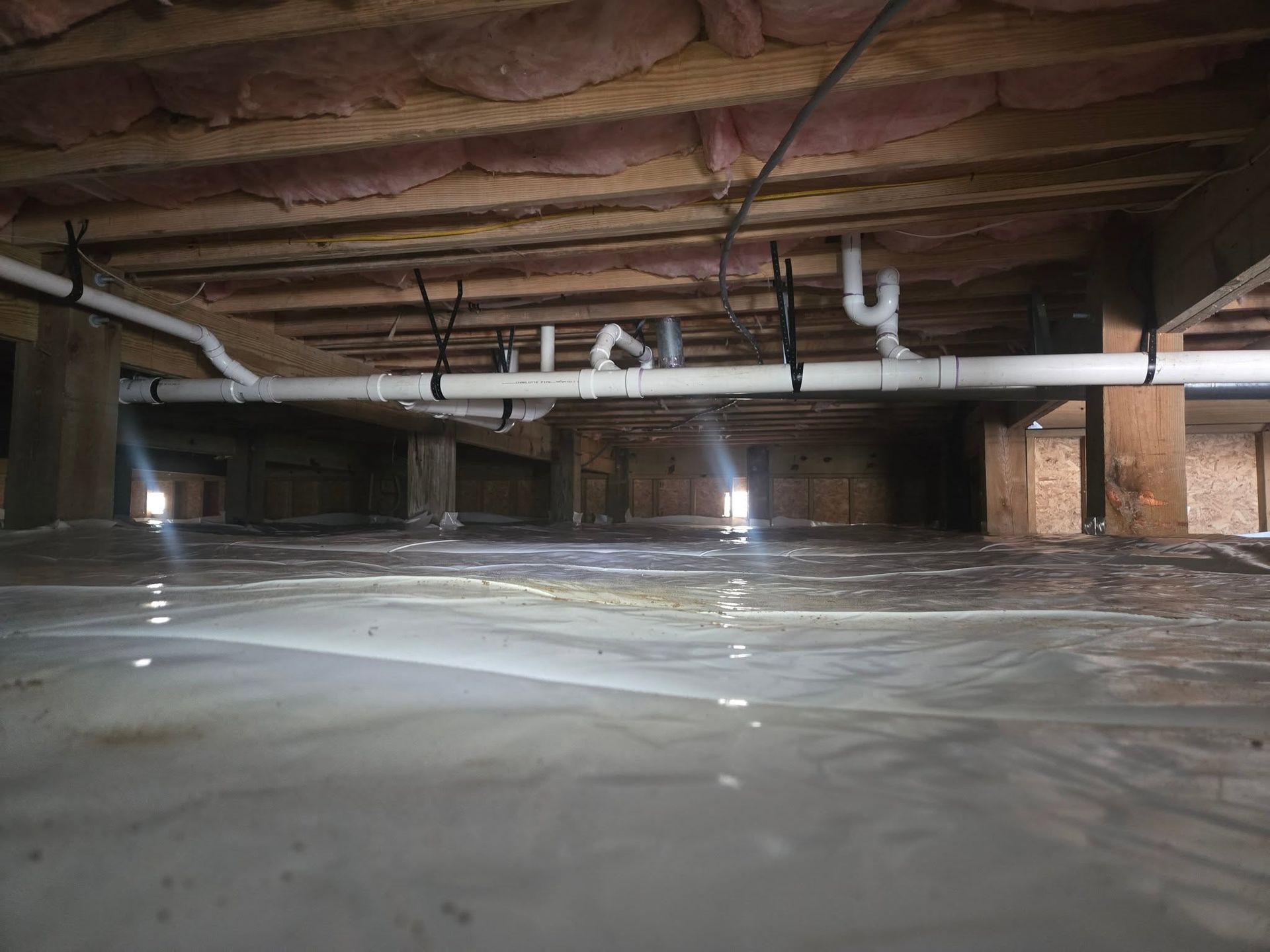
The service addresses heat transfer through floor joists and rim boards, where air leakage and conductive loss occur most frequently. Spray foam creates an airtight seal that blocks moisture-laden air from entering the crawlspace, while fiberglass batts fitted between joists provide thermal resistance when vapor barriers and ventilation remain functional. The choice between materials depends on your crawlspace condition, existing moisture levels, and whether you're converting from vented to encapsulated design.
Schedule a crawlspace evaluation to measure current insulation performance and review material options for your foundation type.
What Proper Insulation Requires Below Your Home
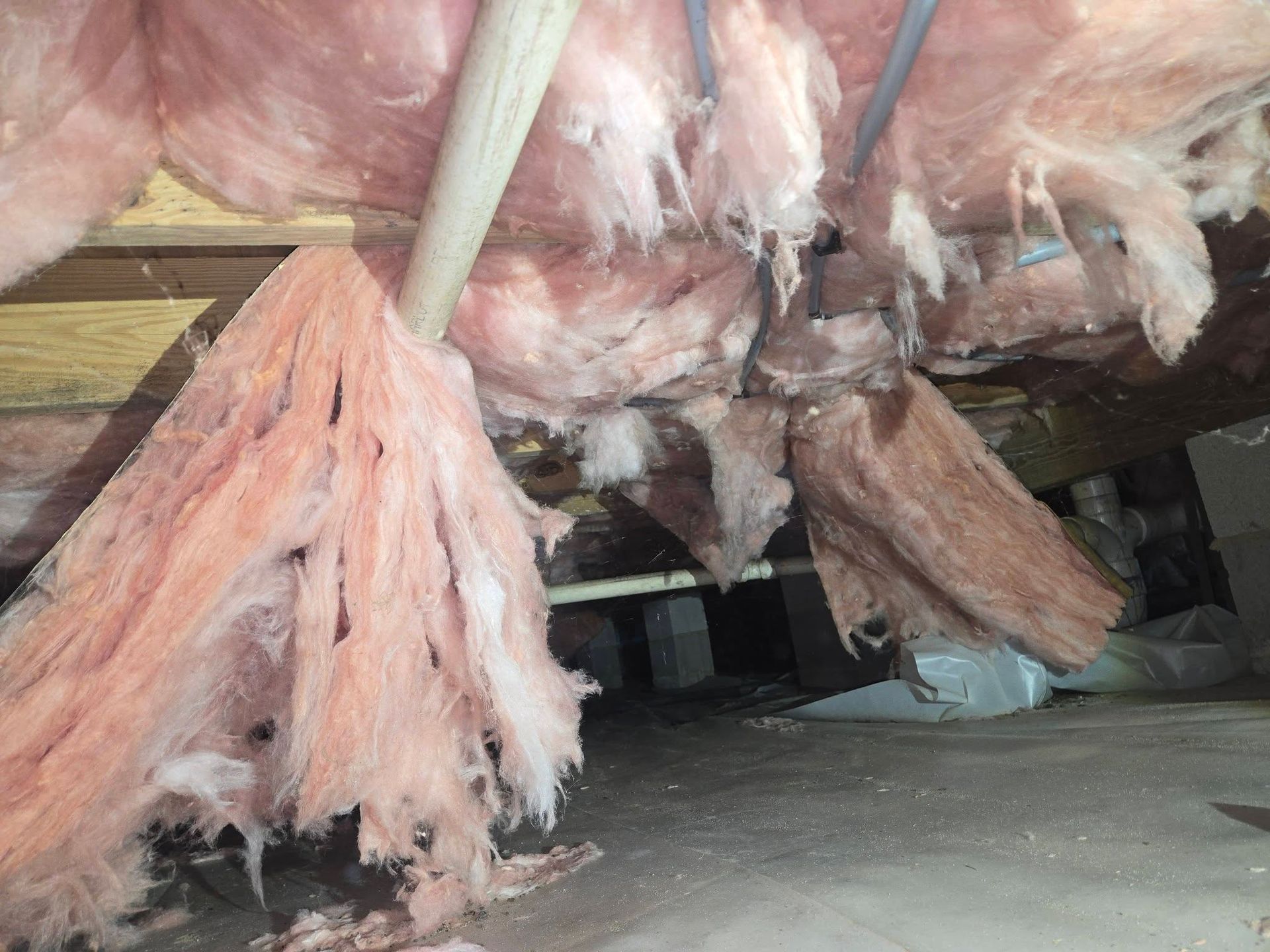
The work begins with removing damaged or water-logged insulation that has compressed or fallen away from floor joists, a common failure pattern in humid climates where fiberglass absorbs moisture and loses R-value. Spray foam application requires clean, dry surfaces and controlled conditions to achieve proper adhesion and expansion, while fiberglass installation demands precise cutting and friction-fitting to prevent gaps that allow air circulation around the batts.
After installation, you'll notice floors feel warmer during winter months and rooms above the crawlspace maintain set temperatures with less HVAC cycling. Utility bills decrease as your heating and cooling systems no longer compensate for unconditioned air infiltrating through the floor assembly. Rooms that previously felt drafty or required space heaters become consistently comfortable without additional heating sources.
Insulation performance depends on controlling moisture before installation, since even closed-cell foam can't reverse existing water damage to floor joists or subflooring. Properties with active groundwater intrusion or inadequate vapor barriers require drainage corrections before insulation work begins, and crawlspaces with standing water need sump systems installed first to protect the investment in thermal upgrades.
Questions Before Starting Your Insulation Project
Homeowners in Hertford often ask similar questions when planning crawlspace insulation upgrades.
What makes spray foam different from fiberglass batts?
Spray foam bonds directly to joists and rim boards to create an air seal that stops both heat transfer and moisture movement, while fiberglass provides thermal resistance without addressing air leakage unless installed with separate air sealing measures.
How does humidity affect insulation longevity?
Fiberglass absorbs water vapor during North Carolina's humid season and can compress or detach from joists when saturation occurs, losing up to half its insulating value, which is why moisture control systems often accompany insulation replacement in coastal areas.
When should I replace existing insulation?
You should consider replacement when batts have fallen from joists, show visible water staining or mold growth, emit musty odors, or when your energy bills increase despite consistent HVAC usage patterns.
What preparation does the crawlspace need?
The area must be clear of standing water, debris, and damaged vapor barriers, with any active pest infestations resolved before installers can work safely and achieve proper material adhesion.
Why do some homes need both insulation types?
Properties transitioning from vented to encapsulated crawlspace design may use spray foam on foundation walls and rim joists for air sealing while keeping fiberglass between floor joists for additional thermal resistance, depending on regional building codes and energy efficiency goals.
J&W Crawlspace LLC evaluates your current crawlspace conditions and recommends insulation strategies that address both thermal performance and moisture management. Request a property assessment to identify which insulation approach fits your home's foundation design and climate exposure.